Restoration marketing: a playbook for water, fire, mold and storm companies
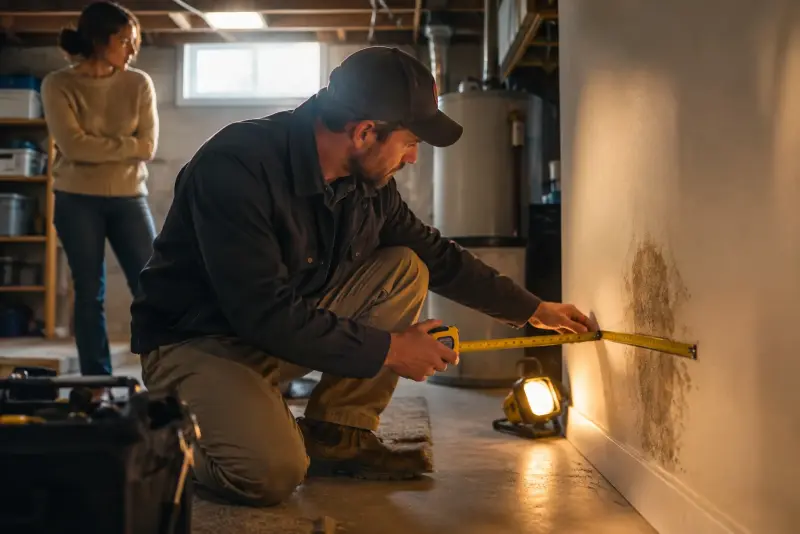
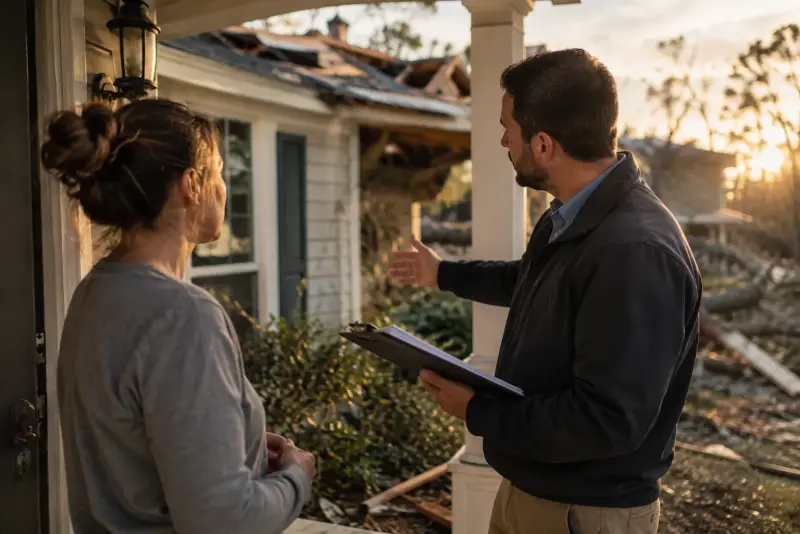
A restoration company does not have one market. It has four, with different urgency, different buyers and different paperwork. Marketing that treats a burst pipe, a kitchen fire, a mold complaint and a hailstorm the same way wastes money on all four.
What restoration marketing has to do
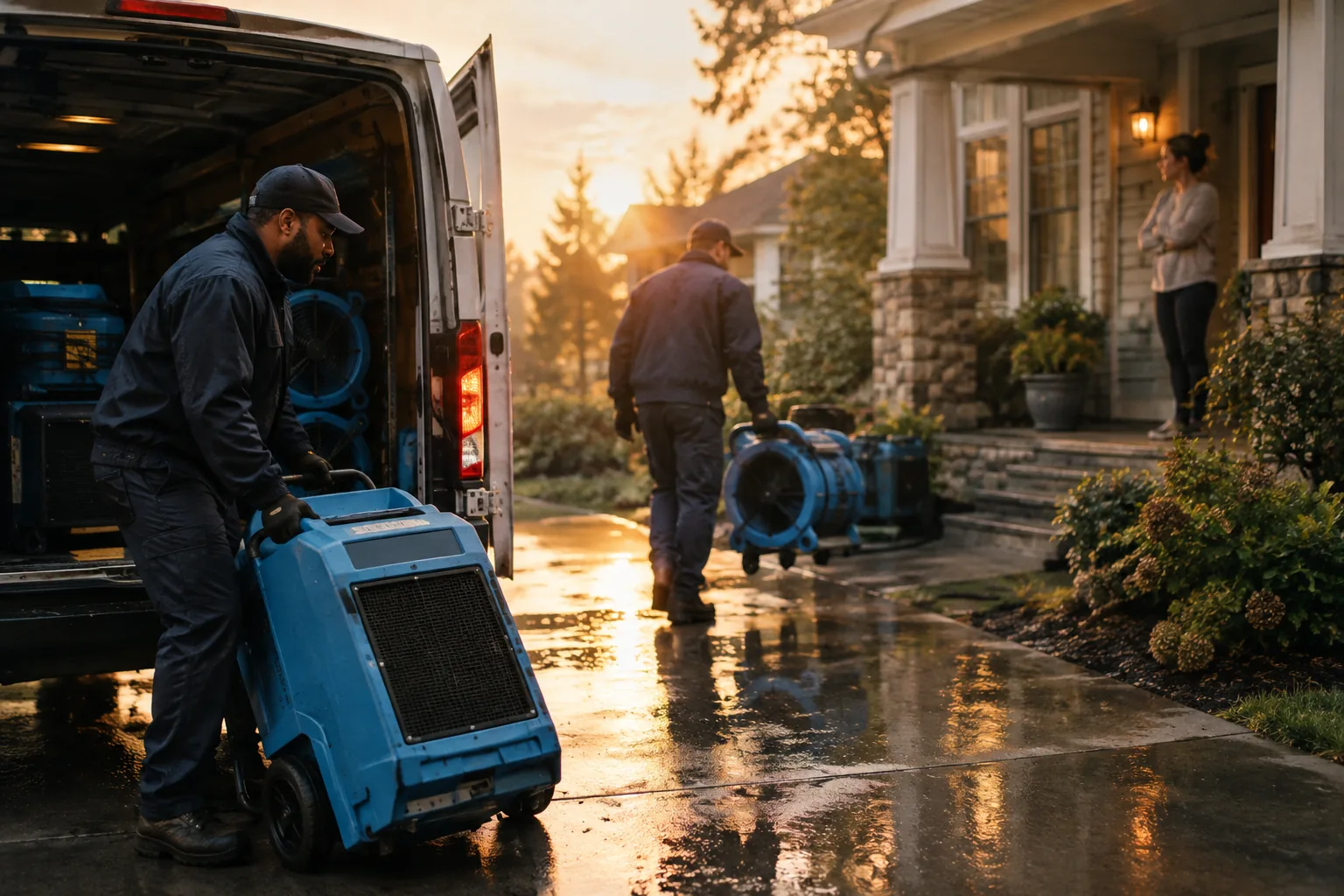
Restoration marketing works when it matches how losses happen: water and fire emergencies come from urgent search, Local Services Ads and referrals from plumbers, insurance agents and property managers, while mold and storm work need their own pages and planning. Measure it by cost per signed job for each loss type, not by total leads.
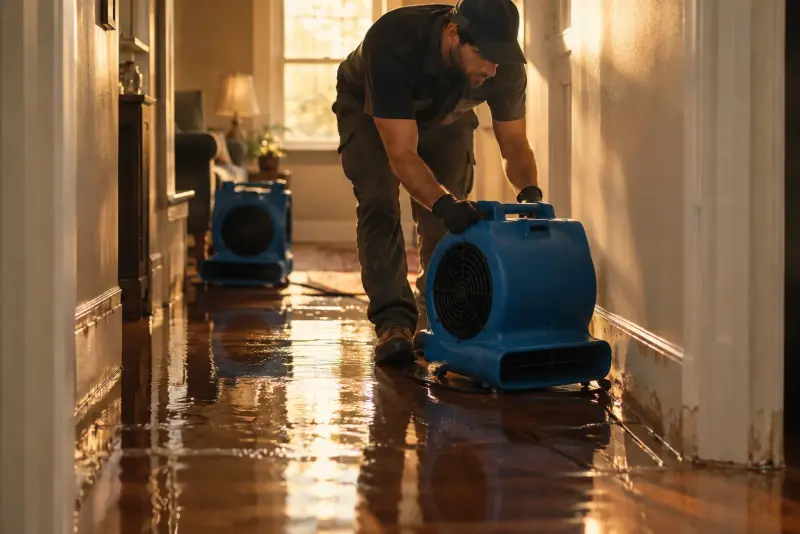
The reason is urgency. EPA guidance says to dry water-damaged areas and items within 24 to 48 hours to prevent mold growth. A homeowner with water on the floor is not comparing five websites; they are calling the first company that looks credible and answers. A homeowner who smells mold in a closet has days or weeks. A property manager with a portfolio has a vendor list and wants to be on yours before the next loss.
So the playbook is not one campaign. It is a set of channels, each matched to a loss type, sharing one intake process and one report.
Emergency-intent search for water damage restoration marketing
Water damage restoration marketing starts with the searches people make while the water is still moving: "water damage restoration near me", "burst pipe cleanup", "flooded basement". These are short, local and urgent, and they convert by phone.
- Search campaigns by loss type. Separate campaigns for water, fire and smoke, mold and storm, each with its own budget, keywords and landing page. Blended campaigns hide which loss type is paying.
- Call-first pages. The phone number at the top, answered by a person, 24/7 if you advertise 24/7. A long form on an emergency page is a lost job.
- Ad schedule matched to dispatch. If nobody can be on-site at 2 a.m., do not pay for 2 a.m. clicks you cannot serve. If you can, say so in the ad.
- Negatives. Exclude DIY, jobs and rental-equipment queries, and the services you do not offer.
Example emergency ad (our illustration): "Water Damage Cleanup in [City] | On-Site Fast, 24/7 | Licensed & Insured | Call Now". Only promise a response time you actually hit.
Fire, smoke and mold searches behave differently. A homeowner after a kitchen fire is often dealing with the fire department, the insurer and a place to sleep before they search for a restoration company, and they read more before calling. Mold searches are slower still, and many start as questions ("is this black mold", "who tests for mold"). Those pages should answer the question first, explain what an inspection involves and what happens after it, and then offer the call. The same urgent, phone-only page that works for a burst pipe tends to underperform here, because the buyer is not ready for the phone yet.
Local Services Ads: only one restoration category
Google's US list of Local Services Ads categories includes "Water damage services". It does not list separate categories for fire restoration, smoke damage, mold remediation or general restoration. That shapes the whole plan:
| Loss type | LSA category on Google's US list? | Main paid channel |
|---|---|---|
| Water damage | LSA: yes, "Water damage services" | Water: LSA plus Search |
| Fire and smoke | LSA: no category of its own | Fire: Search, referrals |
| Mold | LSA: no category of its own | Mold: Search, content, referrals |
| Storm | LSA: depends on the trade (Roofers is listed) | Storm: pre-built Search and LSA, referrals |
Per Google's help center, LSA charges for answered calls, for missed calls during business hours when the caller stays on the line more than 20 seconds, and for messages. For a water company running LSA around the clock, a missed call at night can cost the same as one you answered. Phone coverage is a marketing expense.
Fire, smoke and mold therefore live mainly in Search and referrals. Our pages on water damage restoration leads, fire restoration leads and mold remediation leads show how we split them.
Google Business Profile for restoration companies
Google says local results are based mainly on relevance, distance and prominence, that more reviews and positive ratings can help, and that there is no way to pay for a better local ranking. For restoration, that means:
- Relevance: a primary category that matches your main service, the right secondary categories, and a services list that covers water, fire, mold and storm as you actually perform them.
- Prominence: a review request after every completed job, sent the same way to every customer. Restoration customers are often grateful and willing; the gap is usually that nobody asks.
- Photos with context: equipment set-ups, drying in progress, before and after, with the owner's permission and without anything that identifies the home.
- Honest hours: if you list 24/7, answer 24/7.
Referral programs: plumbers, agents, property managers
Much of the best restoration work comes through people who see losses first. Treat referrals as a channel with a list, a cadence and attribution, not as luck.
- Plumbers are often first on site for a burst pipe or supply-line failure. Make it easy for them to hand the customer over: one number, a fast arrival, and a report back so the plumber looks good.
- Insurance agents hear about claims early. What earns their referrals is clean documentation and customers who do not call them back angry. Our note on claim documentation covers that link.
- Property managers buy on reliability and paperwork across many units. A short capabilities sheet, response commitments you keep and a named contact matter more than ads.
Check the rules before you pay anyone for a referral. In Florida, s. 489.147 bars contractors from paying or accepting referral compensation for services paid from property insurance, with fines of up to $10,000 per violation. Rules vary by state and by license type; have counsel confirm what applies to you. Record the referral source on every job either way, so you know which relationships actually produce signed work.
Intake and storm pre-build: where restoration marketing is won
The same lead can be worth a lot or nothing depending on the first call. The industry reference for water work is ANSI/IICRC S500, the standard for professional water damage restoration; the IICRC lists the fifth edition (2021) as current. Aligning your intake questions with how your technicians will assess the loss makes the call faster and the estimate cleaner. Our guide to water damage intake categories has the question set.
A good intake script, whatever the loss type, captures: what happened and when, where the water or smoke is now, whether it is still active, who owns the property, whether a claim has been opened, and the best way to reach the decision-maker. For mold, EPA suggests homeowners can usually handle an area under about 10 square feet themselves and points larger problems to its remediation guidance, so qualify size early.
Storm work is planned, not chased. Campaigns, pages, extra phone coverage and crew capacity need to exist before the event, not the morning after. The 90-day storm pre-build lays out the timeline, and storm restoration leads explains how we run it.
Measuring restoration digital marketing
Restoration digital marketing is easy to over-report because one big loss can make a bad month look good. Track by loss type and by channel:
- Live answer rate, day and night separately.
- Time to on-site from first contact.
- Signed work authorizations per lead.
- Cost per signed job and average invoice, by loss type.
- Days to payment, because a channel that brings slow-paying claims costs more than its lead price.
Hypothetical example, for illustration: a water campaign producing jobs at $500 each with a $6,000 average invoice and a mold campaign at $350 per job with a $2,500 average invoice are not comparable on cost per job alone. Look at contribution per job and how long it takes to collect. Then move budget to the loss types that pay you, not the ones that produce the most calls.
Whether you hire a restoration marketing agency, build in-house or work with a growth partner, ask for this report by loss type. If nobody can produce it, the first job is tracking, not more ads.
Start with a monthly one-page view: one row per loss type, columns for leads, signed jobs, cost per signed job, average invoice and days to payment, and a separate row for referrals by source. Our one-page contractor dashboard shows the layout. After two or three months, the decisions about where the next dollar goes tend to make themselves.
What to take away
- Treat water, fire, mold and storm as separate markets with separate campaigns and reports.
- EPA advises drying water-damaged areas within 24 to 48 hours: emergency marketing is phone-first.
- Google's US LSA list has "Water damage services" but no separate fire, smoke or mold category.
- LSA can bill missed calls during business hours, so phone coverage is a marketing cost.
- Run referrals from plumbers, agents and property managers as a tracked channel, within your state's rules.
- Align intake with how technicians assess the loss and report cost per signed job by loss type.
Sources
- Google Local Services Help: Getting started with Local Services Ads, United States (categories)
- Google Local Services Help: How leads work (charged and missed calls)
- Google Business Profile Help: Tips to improve your local ranking on Google
- IICRC: ANSI/IICRC S500 Standard for Professional Water Damage Restoration
- U.S. EPA: A Brief Guide to Mold, Moisture and Your Home (24-48 hour drying, 10 sq ft)
- Florida Statutes s. 489.147: Prohibited property insurance practices (referral compensation)
This article is operational guidance, not legal or financial advice. Regulations change and differ by state; verify anything here with your own counsel before you act on it.