Your intake script should mirror the standard your techs work to
The gap between what the intake asks and what the standard requires is where under-scoped jobs and blown schedules come from. Closing it costs nothing.
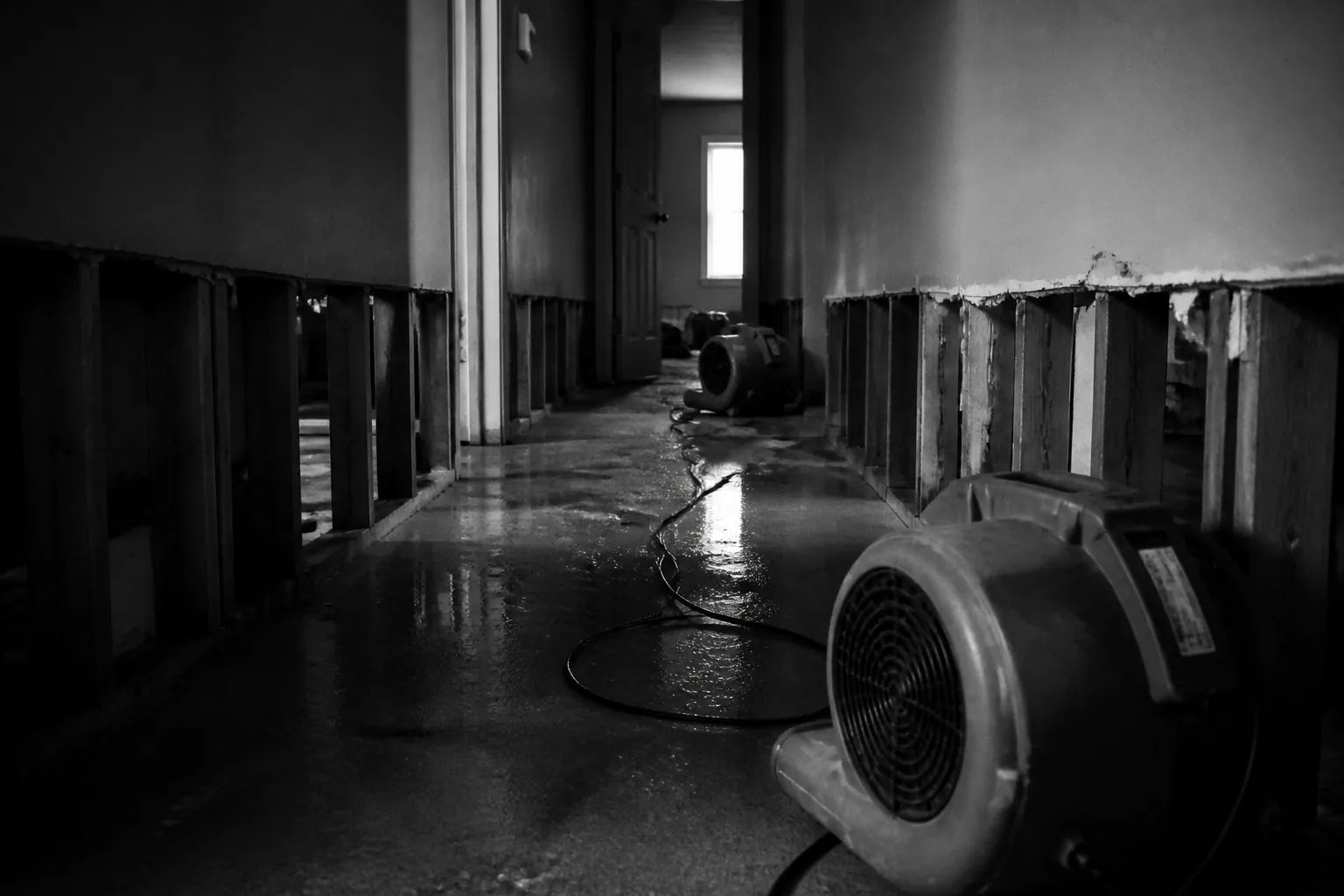
Two axes, not one
Water losses are classified along two independent axes in restoration practice: how contaminated the water is, and how much material got wet. The IICRC S500 — the consensus standard for professional water damage restoration — is the document your technicians' certifications are built on, and it treats these separately for a reason.
Contamination determines what can be dried in place and what has to be removed, what PPE is required, and whether the job is a health matter. Scale determines equipment count, drying time and crew hours.
A quote that gets one right and the other wrong is still wrong. And you cannot get either right from "there is water in my basement."
What the phone call has to establish
Five questions, before anyone drives anywhere. None of them are technical enough to confuse a homeowner.
- Where did the water come from? Supply line, appliance, roof, groundwater, sewer. This is the contamination question in plain language.
- How long has it been wet? Hours versus days changes everything about what can be saved.
- How many rooms, and what is the flooring? Scale, plus whether there is carpet and pad to decide about.
- Is it still actively leaking? Determines whether the first call is you or a plumber, and whether the clock has even started.
- Has anyone touched it yet? A homeowner with a shop-vac and three days has produced a different job than a fresh loss.
Why this is a marketing document, not just an ops one
Three consequences that show up in your numbers, not your paperwork.
Your ads can target the source. Someone searching about a burst supply line and someone searching about sewage backup are different buyers with different urgency, different insurance posture and different job value. If intake never captures source, your campaigns can never learn which source is worth more to you.
Your dispatch stops guessing. Sending two techs to a job that needed five, or five to a job that needed two, is a margin event caused by the phone call.
Your close rate becomes explainable. When you know source, age and scale at intake, you can see which combinations you win and which you lose, and stop treating "water damage" as one product.
The one thing not to do
Do not quote a price on that call. You have five answers and no readings. The standard your techs work to exists precisely because this work cannot be scoped from a description, and the firms that quote anyway are the ones explaining a change order on day three.
What you can commit to on the phone is a response time. That is the promise that wins emergency work, and unlike a price, it is one you control.
If you want the actual standard rather than a summary, the IICRC publishes S500 directly — it is a paid document and worth owning if you are writing scopes.